Listeners:
Top listeners:
-
 play_arrow
Mad Radio New York
-
 play_arrow
Mad Radio Miami
-
 play_arrow
Mad Radio Bogotá
-
 play_arrow
Mad Radio Medellín
-
 play_arrow
Mad Records
-
 play_arrow
Mad Lo-Fi

THE NIGHT WE REMEMBER: Possessed by Music
THE NIGHT WE REMEMBER: Possessed by Music
No one remembers the exact moment they stopped being who they were.
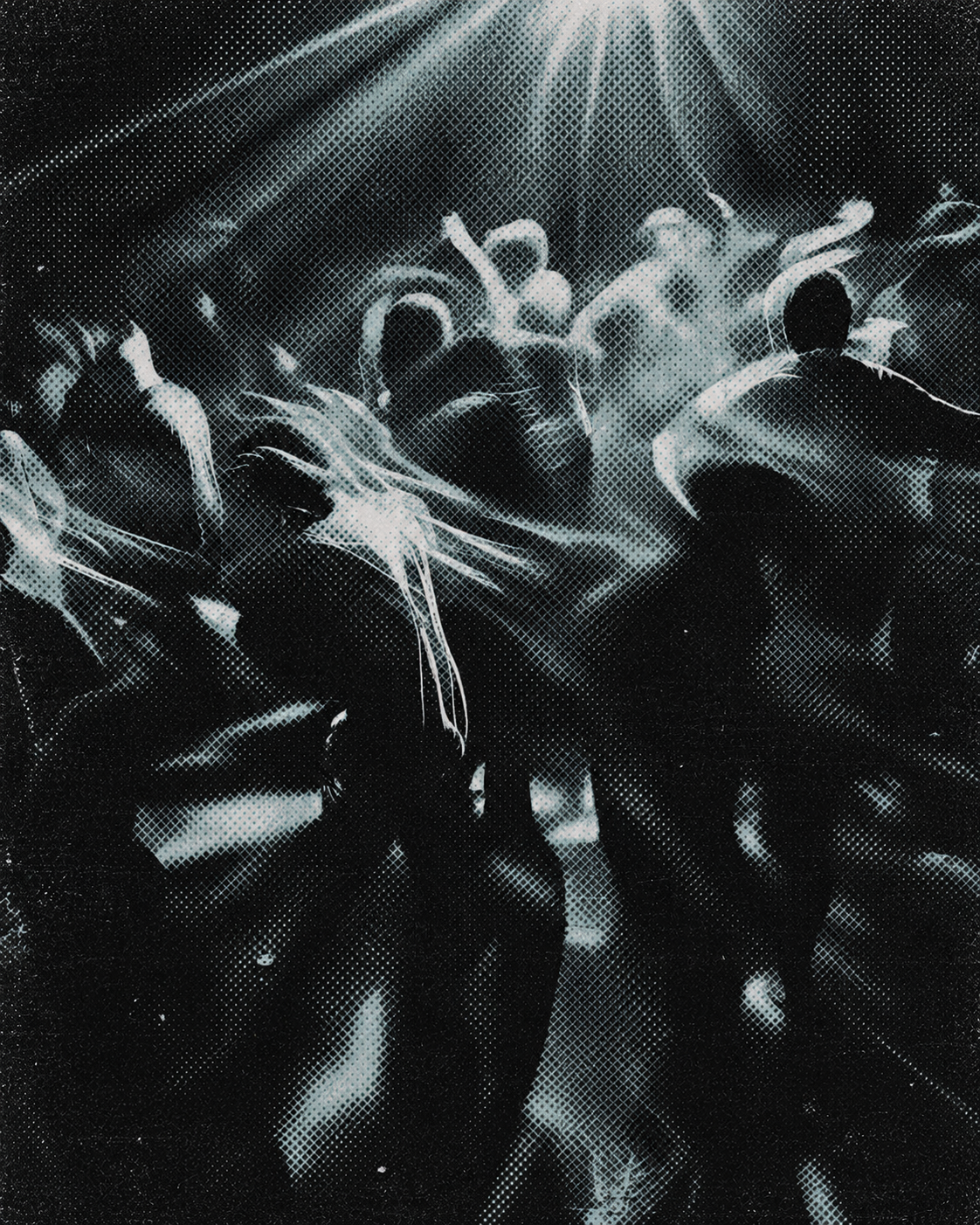
It almost always happens after midnight. The heat rises, the smoke swallows faces, the bass starts moving your ribs, and before you know it, you have no idea where you left your phone. You don’t care how you look anymore. Someone else is dancing for you, and it is you.
That version of you doesn’t come out in daylight. It needs darkness, volume, and a place that doesn’t ask questions. And ever since dance floors have existed, people have built those places in the spots where they weren’t supposed to exist.
The Costume vs. The Night
Every October, the world agrees on one thing: for one night, you are allowed to be someone else. Costumes appear, characters emerge, an entire industry dedicated to lending you an identity for a few hours. Halloween works because it promises something almost no one allows themselves the rest of the year: letting go of the person you are every day.
But there is another way to do it, and it is older and more honest.
A costume puts something on you. The night takes something away.
It isn’t about inventing a character, but about stopping the editing of the person you already are: the one who watches themselves, explains themselves, compares themselves. What appears after midnight isn’t someone else. It’s the part of you that daylight doesn’t let out.
That part needs three things to emerge: a place that gives it permission, a sound that sets it free, and armor to arrive whole. The history of the dance floor is, at its core, the story of how those three things found each other.
From Underground Warehouses to Sonic Mass
The Place That Gives It Permission
In 1977, at 206 South Jefferson Street in Chicago, The Warehouse opened. It was a refuge for Black and Latino queer communities who had nowhere outside to be fully themselves. There, transformation wasn’t a game. It was relief.
Frankie Knuckles mixed disco, funk, and soul on two turntables until a song stopped being a song and became a single night. The records played there eventually became classified in record stores as house music. A club gave a sound its name.
Eleven years later, in Berlin, UFO opened in the basement of a building at Köpenicker Straße 6 in Kreuzberg, accessible through a trapdoor. It was precarious, dark, and illegal in spirit. And a place like that doesn’t stay still: the club soon moved to a former commercial space on Großgörschenstraße in Schöneberg.
Then, in 1989, the Wall fell, and the city filled with empty buildings that no one knew what to do with. UFO closed in 1990. In 1991, its founders opened Tresor inside the vaults of the former Wertheim department store, right beside the border that had just ceased to exist.
It was as if a city changing its identity had found, in the night, the place where it could try on a new one.
Two cities, two countries, and the same condition: a door that is difficult to find, and an inside that asks no questions.
That’s where permission becomes real.
The Sound That Sets It Free
Permission isn’t enough. You need something that does the work of setting it free, and the story of that something resembles the story of the person who walks onto the dance floor.
In 1981, the Roland TB-303 was released, designed to imitate the bass of a guitar. It failed at that. And because it failed, it became the acid sound that would define the rave scene.
The 808 and 909 followed a similar path: machines designed for a specific job that escaped their original purpose and became the voice of something else.
It’s hard not to see the resemblance.
A machine designed to be one thing becomes something else when you let it play.
A person does too.
What sound does is simple. The bass, the repetition, the volume, and the movement of everyone around you push until you stop hearing the song as something outside of you.
You start to feel it.
The body follows the rhythm without asking for permission.
The Armor to Arrive Whole
Then comes the part about arriving whole.
The clothing of those scenes (leather, sportswear, synthetic fabrics, everything dark and shiny) was never a character. It was armor: each person’s way of entering a place where they were going to lose control without losing themselves.
That’s the clearest difference from Halloween.
The costume says: “Today I am someone else.”
The armor says: “Today I dare to be myself.”
You don’t put on a character; you become the feeling.
What Doesn’t Get Posted
Today, we document everything. Even a night that should disappear by sunrise lives on in hundreds of photographs.
Maybe that’s why the nights that transform us the most are the ones that can barely be found: a basement with a trapdoor, a nameless warehouse, a dance floor where no one is taking notes because everyone is too busy being someone else—or, finally, being themselves.
That is the night we want to build with MADLYWEEN.
Not a costume party, but a night where the sound does the work and everyone leaves carrying a version of themselves they didn’t expect to find.
You don’t need a costume.
You don’t need a character.
You just need to be there when it happens.
What do you think will possess you?